
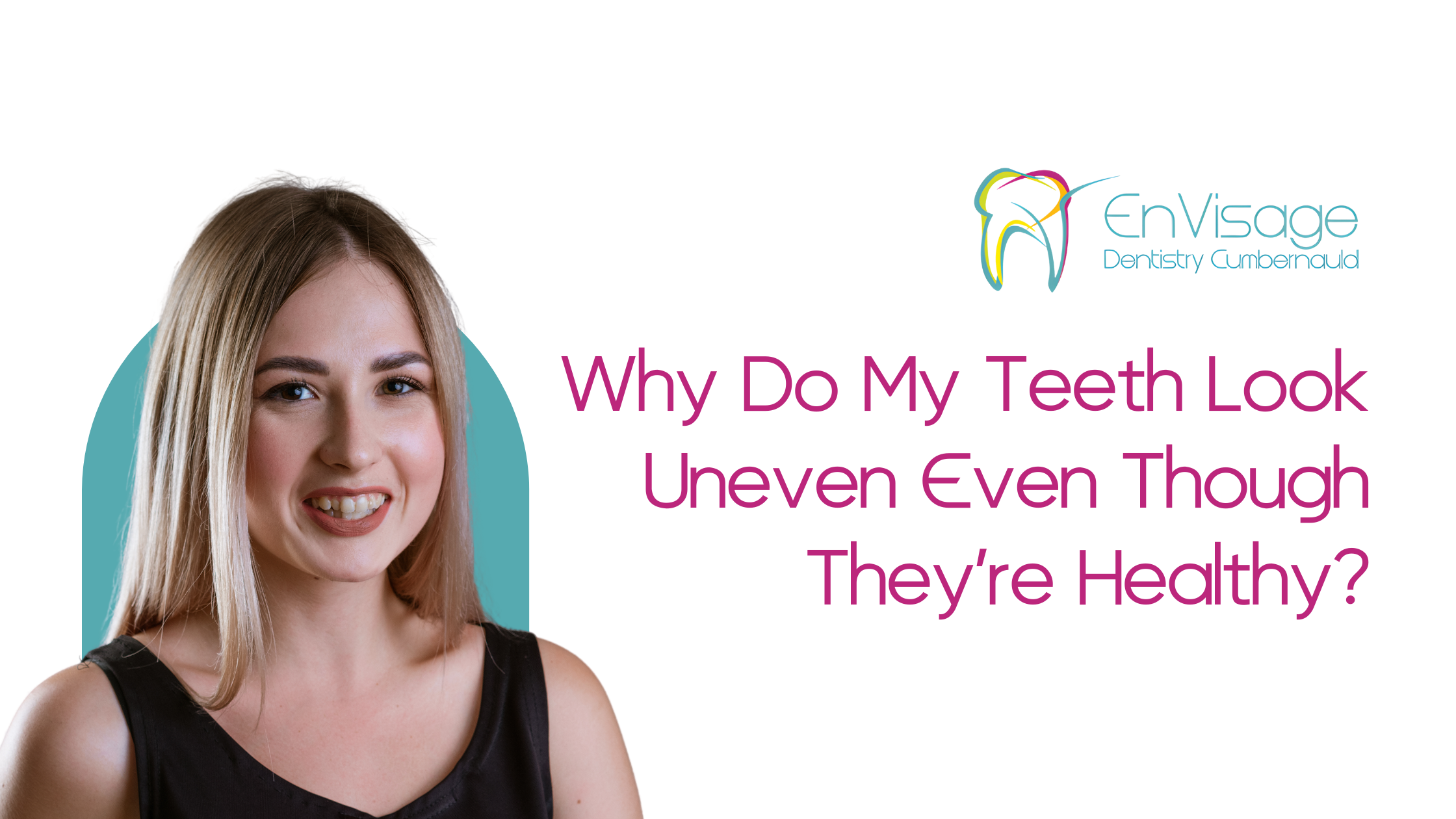
Many people in Cumbernauld are surprised to be told their teeth are healthy, yet still feel uneasy about how their smile looks. There is no pain, no decay, and no obvious dental problem but something doesn’t feel quite right. Perhaps one tooth looks shorter, the edges don’t line up evenly, or the smile feels slightly unbalanced.
This is a very common concern. Importantly, uneven-looking teeth do not automatically indicate poor oral health. In many cases, the cause is gradual, structural, or simply part of how teeth naturally develop and change over time.
At Envisage Dentistry Cumbernauld, we regularly support patients who want understanding rather than pressure clear explanations, realistic expectations, and time to decide what feels right for them.
What Does “Uneven Teeth” Actually Mean?
Uneven teeth can present in subtle ways, even when teeth and gums are otherwise healthy. This might include:
- Teeth that vary slightly in length or shape
- Small overlaps or spacing that weren’t always noticeable
- Edges that appear worn, flattened, or mildly chipped
- A smile that feels asymmetrical rather than crooked
These changes often develop slowly and may go unnoticed until they begin to affect confidence or self-awareness.
Common Reasons Healthy Teeth Can Look Uneven
Natural Tooth Shape and Genetics
No two teeth are identical. Genetics play a significant role in tooth size, shape, and spacing. Some people naturally have shorter lateral incisors, rounded edges, or mild asymmetry, all of which are considered normal from an oral health perspective.
As we age and facial features change, these natural variations can become more noticeable, even when teeth remain strong and well cared for.
Gradual Tooth Wear
According to UK dental guidance, teeth experience natural wear throughout life. Everyday activities such as chewing, clenching, or brushing too firmly can slowly alter tooth edges over time.
Common contributing factors include:
- Night-time clenching or grinding
- Acid exposure from diet or reflux
- Natural enamel thinning with age
This type of wear often affects the front teeth first, leading to uneven edges while overall tooth health remains stable.
Minor Tooth Movement Over Time
Teeth are not fixed permanently in place. Even without discomfort, small movements can occur over the years, particularly if retainers are no longer worn following orthodontic treatment.
This movement may result in:
- Slight overlaps
- Small spacing changes
- A smile that feels less aligned than before
Because these changes are usually gradual and painless, they are often noticed visually rather than physically.
Older Dental Work
Fillings, bonding, or restorations placed many years ago may no longer blend as seamlessly as they once did. Natural changes in tooth shape or gum position can sometimes make older dental work more noticeable, contributing to an uneven appearance.
Does This Always Need Treatment?
Not necessarily.
If your teeth are healthy, comfortable, and stable, treatment is often optional rather than essential. Many patients simply want reassurance or clarity before deciding whether to take any further steps.
Some people choose to explore gentle options because uneven teeth may:
- Affect confidence when smiling or speaking
- Make cleaning slightly more challenging
- Continue to change gradually if wear or movement progresses
The most important step is understanding whether the changes are stable, likely to progress, or simply part of natural variation.
Treatment Discussion (Soft & Ethical)
At Envisage Dentistry Cumbernauld, any discussion around treatment is approached conservatively and tailored to the individual. Options are explained, not assumed or encouraged.
Composite Bonding for Subtle Refinement
Composite bonding may be considered for smoothing rough edges, addressing small chips, or gently rebalancing tooth shape. It is a minimally invasive option that preserves natural tooth structure and can be adapted carefully to suit each patient.
This approach is typically discussed only where unevenness is mild and oral health is otherwise stable.
Alignment Planning
Where unevenness is linked to tooth movement, aligner-based treatment may be discussed as a potential option for some patients. This is often part of a longer-term plan rather than an immediate decision, allowing time for consideration and monitoring.
Preventive Support
In some cases, the most appropriate step is prevention rather than correction. Managing grinding, reviewing brushing technique, or addressing dietary factors may help protect tooth shape and reduce further unevenness over time.
Preventive and Long-Term Thinking
Modern dentistry increasingly focuses on long-term oral health and sustainability. Sometimes, maintaining what you already have and preventing further change is the most valuable outcome.
This may involve:
- Monitoring wear or movement over time
- Planning treatment for the future rather than immediately
- Making small preventive adjustments that support stability
Having a clear understanding of your teeth often brings reassurance, even if no treatment is chosen.
Contact us
If you’ve been wondering why your teeth look uneven despite being healthy, you’re not alone and there’s no need to rush into any decision.
If you’d like clarity or advice, our team at Envisage Dentistry Cumbernauld is here to help.
📞 01236 724891
📧 [email protected]
FAQs
Are uneven teeth a sign of dental problems?
Not always. Many people have healthy teeth with natural variations in shape, wear, or alignment that do not affect oral health.
Can uneven teeth change over time?
They can. Gradual wear or minor tooth movement may alter appearance slowly, even without pain or discomfort.
Do uneven teeth always require cosmetic treatment?
No. Treatment is optional and depends on individual comfort, preferences, and overall oral health.
Is it helpful to have uneven teeth checked early?
An early assessment can provide reassurance and allow for conservative planning if changes need monitoring in the future.