
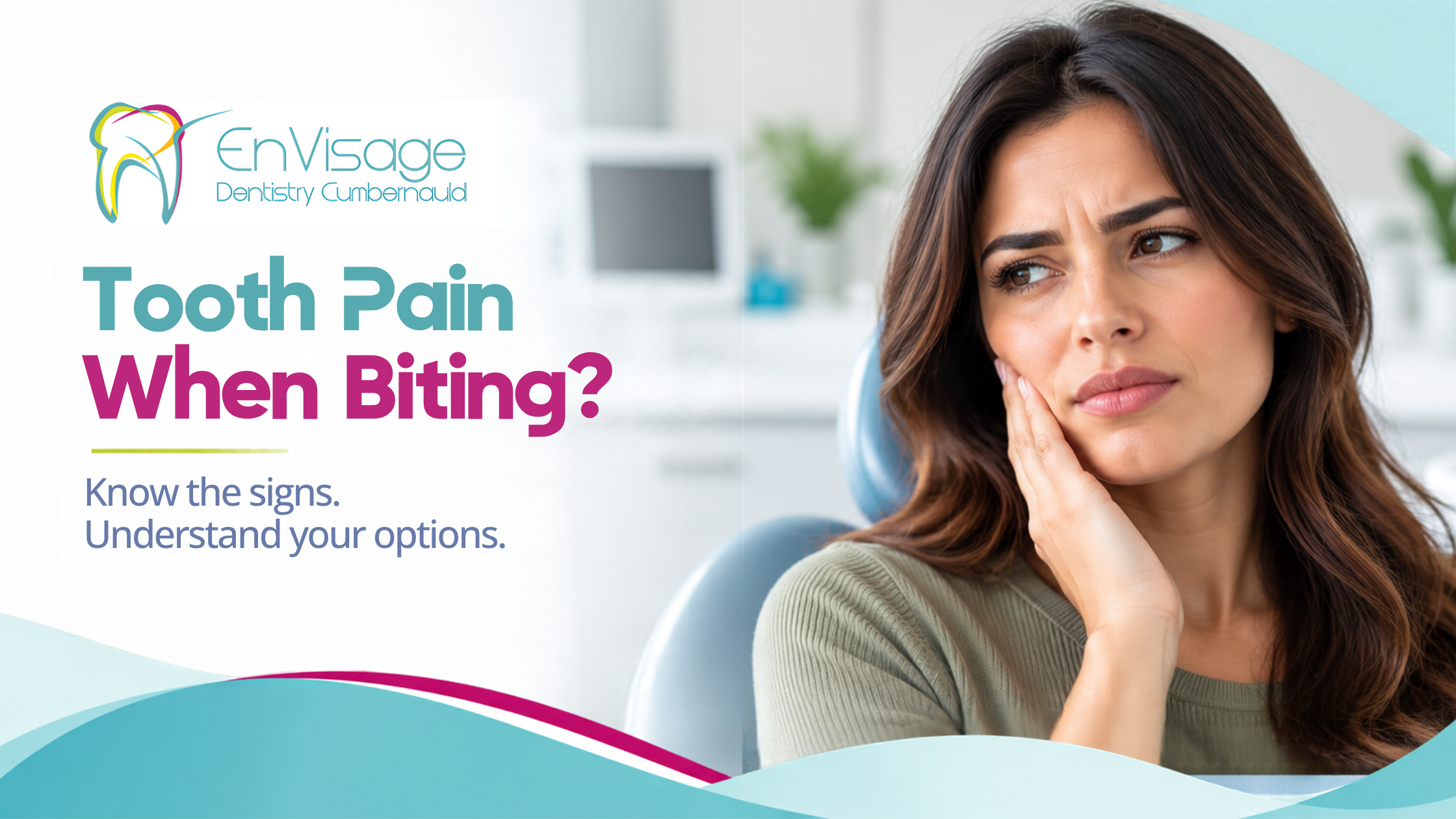
If your tooth hurts when you bite down, chew food or release your bite, it is worth paying attention to the symptom. The discomfort might be caused by tooth sensitivity, a damaged filling, tooth decay or a small crack that is not immediately visible. Sometimes, pain when chewing can also indicate inflammation or infection around the tooth.
You might notice the problem when eating something hard, chewing on one side of your mouth or biting into a sandwich. The pain may disappear quickly, return every time you eat, or gradually become more noticeable.
Although not every case of tooth pain indicates a serious problem, pain when biting should not be ignored, particularly if it persists, gets worse or occurs alongside swelling or a bad taste in your mouth.
If you have noticed tooth pain when biting in Cumbernauld, a dental examination can help identify the likely cause and determine whether treatment is needed.
What causes tooth pain when biting down?
Several dental problems can cause discomfort when pressure is placed on a tooth. The location, timing and type of pain can offer useful clues, but symptoms alone cannot confirm a diagnosis.
- A cracked or damaged tooth
A crack can develop when a tooth is exposed to pressure or an injury. Biting down on hard foods, chewing ice, teeth grinding or a blow to the mouth may contribute to damage.
Some cracks are too small to see in a mirror. You might experience a sharp pain when biting, discomfort when releasing your bite or sensitivity to hot and cold drinks.
A cracked tooth does not always need the same treatment as another damaged tooth. The appropriate option depends on the position and extent of the crack and whether the inner part of the tooth has been affected. A dentist can assess the tooth and discuss suitable treatment.
- Tooth decay
Tooth decay can develop without obvious symptoms in its early stages. As it progresses, the affected tooth may become sensitive or painful, particularly when eating or drinking.
If decay reaches the inner tissues of the tooth, discomfort can become more persistent. You may also experience sensitivity to sweet foods, hot drinks or cold water.
Early assessment can help determine how much of the tooth has been affected and whether a filling or more involved treatment is needed.
- A loose, worn or broken filling
If you have had a filling for several years, it may become worn or damaged. A filling can also loosen or break, leaving the tooth underneath vulnerable to pressure, food debris and sensitivity.
You may notice a change in the way your teeth fit together, a rough edge or pain when chewing. Sometimes, the damage is not visible without a dental examination.
If you suspect a filling has broken or become loose, arrange an appointment rather than repeatedly testing the tooth by biting down on different foods.
- Inflammation or infection around the tooth
Pain when biting may occur when the tissues around a tooth become inflamed. This can happen because of deep decay, damage to the tooth or an infection.
Other symptoms may include throbbing pain, tenderness, swelling, a bad taste in your mouth or discomfort that continues even when you are not eating.
A dental abscess requires urgent dental assessment and treatment; it will not clear up on its own. If you have facial or mouth swelling, fever or rapidly worsening pain, seek urgent dental advice. If swelling makes it difficult to breathe or swallow, call 999 or attend A&E immediately.
- Teeth grinding or clenching
Some people clench their teeth during the day or grind them while asleep. This places repeated pressure on the teeth and surrounding structures.
Possible signs include jaw discomfort, headaches on waking, worn tooth surfaces or several teeth feeling tender when chewing. However, these symptoms can have other causes, so an examination is important before deciding whether grinding is responsible.
Depending on the findings, your dentist may discuss ways to reduce excessive pressure on the teeth, which could include advice about clenching habits or a custom-made mouthguard.
- Gum problems or sensitivity
Pain around a tooth does not always originate from the tooth itself. Inflamed gums, gum recession and exposed root surfaces can contribute to discomfort.
Sensitivity often feels like a brief, sharp reaction to cold, heat or sweet foods. Pain that is specifically triggered by biting, however, may have a different cause and should not automatically be treated as ordinary sensitivity.
A dentist can check your teeth and gums to establish what is happening.
How can I tell whether the pain is serious?
There is no reliable way to determine the severity of a dental problem from pain alone. A small crack can cause noticeable discomfort, while tooth decay can progress before producing obvious symptoms.
Pay attention to whether the pain is new, persistent, getting worse or affecting your ability to eat and sleep.
|
What you notice |
What to do |
|
Mild discomfort that keeps returning when chewing |
Arrange a dental assessment rather than waiting for it to worsen. |
|
Sharp pain when biting or releasing your bite |
Contact a dentist, as a crack or other damage may need checking. |
|
Pain with a broken or loose filling |
Arrange an appointment for assessment and repair if needed. |
|
Persistent toothache, swelling, fever or a bad taste |
Seek urgent dental advice. |
|
Swelling affecting breathing or swallowing |
Call 999 or attend A&E immediately. |
If toothache lasts longer than a day or two, does not improve with appropriate pain relief, or occurs with pain on biting, NHS guidance recommends contacting a dentist. You should seek advice sooner if symptoms are severe or worsening.
What will a dentist check if my tooth hurts when I bite?
Your appointment will usually begin with questions about the pain and when it occurs. Try to describe whether it happens as you bite down, when you release your bite, or with hot and cold foods. Mention any recent injury, previous filling or crown, and whether you grind or clench your teeth.
Your dentist may then:
- Examine the tooth and surrounding gums for signs of decay, damage, swelling or inflammation.
- Check existing fillings, crowns and other restorations.
- Assess the tooth and your bite where appropriate.
- Recommend dental X-rays if they would help investigate the problem.
- Discuss any further tests needed to understand the cause.
Not every painful tooth requires an X-ray or the same set of tests. The assessment depends on your symptoms and what the dentist finds.
Once the likely cause is identified, the dentist can explain the options, the reasons for recommending them and whether the problem needs urgent attention.
What treatment might be needed?
Treatment depends on the cause of the pain and how much of the tooth or surrounding tissue has been affected.
A filling or repair
If the problem is a cavity or a damaged filling, a dentist may be able to repair the affected area with a suitable filling or restorative material. The aim is to restore the tooth and help protect it from further damage.
A crown
A crown may be considered when a tooth has lost a significant amount of its structure or needs additional protection. Whether a crown is appropriate depends on the tooth’s condition and the extent of the damage.
Root canal treatment
If the pulp inside the tooth is irreversibly inflamed or infected, root canal treatment may be recommended to treat the affected tissue and help retain the tooth. The dentist will explain whether this is suitable for your situation.
Treatment for gum or bite-related problems
If gum disease, exposed roots, clenching or grinding is contributing to the discomfort, the approach will be different. Treatment might involve managing gum health, reducing sensitivity or addressing excessive pressure on the teeth.
In some cases, a tooth may be too damaged to restore and removal may need to be discussed. Your dentist should explain the findings and available options before you make a decision.
What can I do at home while waiting for an appointment?
Home care may help reduce discomfort temporarily, but it will not repair a crack, replace a broken filling or treat a dental abscess.
While waiting for advice:
- Choose softer foods and avoid chewing on the painful side.
- Avoid very hot, cold or sweet foods and drinks if they trigger discomfort.
- Keep your teeth clean by brushing gently with fluoride toothpaste.
- Ask a pharmacist about suitable pain relief if you need it, and follow the product instructions.
- Do not repeatedly bite down to test the tooth, as this may aggravate the discomfort.
- Avoid placing aspirin directly on the tooth or gum, as this can damage the tissues.
If symptoms become more severe or you develop swelling or a fever, do not rely on home remedies. Seek urgent dental advice.
For further guidance, read NHS inform’s advice on toothache.
Can tooth pain when biting be prevented?
Not every dental problem can be prevented, but a few habits can reduce the risk of decay and help protect your teeth.
Brush twice daily for around two minutes with fluoride toothpaste and clean between your teeth every day. Limit sugary foods and drinks, particularly frequent snacking between meals, and attend dental check-ups as recommended for your individual needs.
If you regularly grind your teeth, ask your dentist whether this could be contributing to tooth wear or discomfort. Avoid chewing ice or using your teeth to open packaging, and seek advice if you notice a chipped tooth or a change in an existing filling.
Looking for a dentist in Cumbernauld?
If you have noticed pain when biting, chewing or releasing your bite, a dental assessment can help establish the cause and identify the next steps.
At Envisage Dentistry Cumbernauld, you can discuss your symptoms and any concerns about treatment with the dental team. If you feel nervous about dental appointments, let the team know. IV sedation may be an option for some patients and procedures following an individual assessment; your dentist can explain whether it is suitable for you.
The practice also offers free parking, and first-floor access is available by lift.
Do not ignore recurring tooth pain. Contact the practice to discuss your symptoms and arrange an appropriate appointment. If you have urgent symptoms outside normal opening hours in Scotland, NHS 24 can be contacted on 111 for advice. For difficulty breathing or swallowing caused by swelling, call 999.
FAQs About Dental Anxiety
Why does my tooth hurt when I bite down but not at other times?
Pain that occurs only when biting can be associated with a cracked tooth, a damaged filling, inflammation around the tooth or changes in your bite. It is not possible to identify the cause from this symptom alone, so arrange a dental assessment if it persists or returns.
Can a cracked tooth heal by itself?
A crack in a tooth does not heal in the same way as a cut on your skin. Some cracks may be managed with monitoring or restorative treatment, depending on their extent, but others can worsen. A dentist can assess the damage and discuss suitable options.
Should I see a dentist if my tooth only hurts when chewing hard food?
Yes, recurring pain when chewing hard food is worth checking, even if the tooth feels normal at other times. Avoid putting pressure on it and arrange an appointment, particularly if the pain is sharp, increasing or accompanied by sensitivity.
When should I seek urgent help for tooth pain?
Seek urgent dental advice if you have severe or persistent pain, swelling, fever, a bad taste associated with suspected infection, or symptoms that are getting worse. In Scotland, you can contact NHS 24 on 111 for urgent out-of-hours advice. If swelling makes breathing or swallowing difficult, call 999 or attend A&E immediately.