
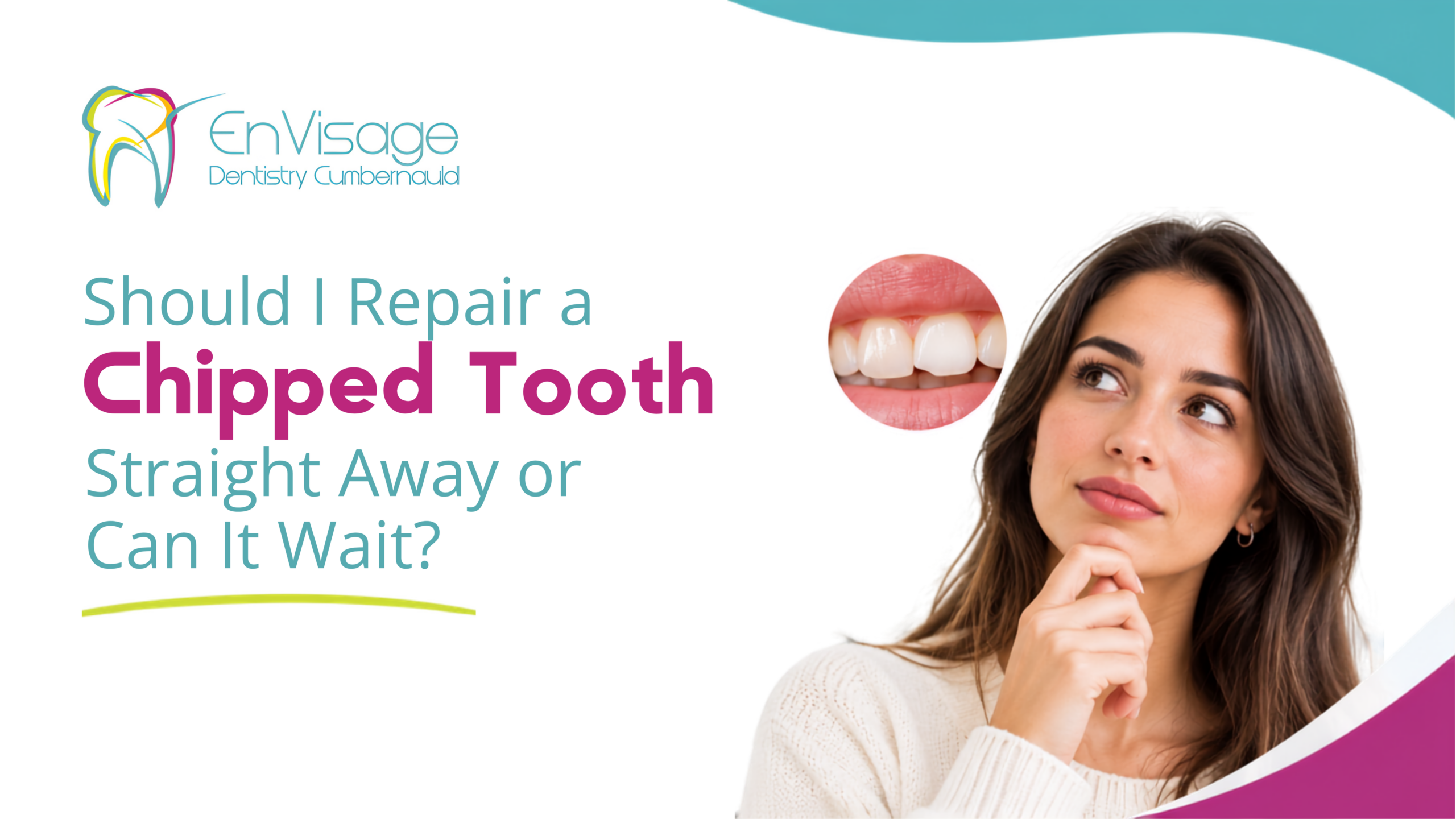
A chipped tooth can be surprisingly easy to ignore, particularly if it does not hurt. You may notice a small rough edge with your tongue, see a tiny change when you smile, or simply wonder whether it is something that needs fixing.
The answer depends on how the tooth chipped, how much tooth has been lost and whether there is any pain or damage underneath.
Some small chips can be monitored, while others should be checked by a dentist promptly. If you have a chipped tooth in Cumbernauld, an examination can help establish whether you need treatment or simply reassurance.
At Envisage Dentistry Cumbernauld, we can assess the tooth and explain your options, including monitoring, smoothing or repairing the tooth with treatments such as composite bonding.
When Can a Chipped Tooth Wait?
Not every chipped tooth needs emergency treatment.
If you have a small chip, the tooth is not painful, there is no bleeding or swelling, and you can bite normally, it may not require immediate treatment. Your dentist can check it during a routine appointment and advise whether it is safe to leave it alone.
Sometimes a tiny chip is mainly cosmetic or creates a slightly rough edge. In these cases, the tooth may simply need smoothing, or you may decide to repair it because you would prefer to restore its original appearance.
However, “it does not hurt” does not always mean there is no problem. A chip can sometimes expose a deeper part of the tooth or occur because the tooth was already weakened.
If you are unsure, getting it checked is the safest approach.
When Should a Chipped Tooth Be Checked Quickly?
Some situations need more prompt attention.
You should contact a dentist if your chipped tooth is:
- Causing significant pain or sensitivity
- Bleeding or surrounded by swelling
- Sharp enough to cut your tongue or cheek
- Very loose or unstable
- Broken after an accident or injury
- Showing a large piece of missing tooth
- Causing pain when you bite
- Associated with a tooth that has become noticeably darker
A larger break can sometimes expose the inner part of the tooth, where the nerves and blood vessels are located. In these cases, leaving the tooth untreated could allow further damage or infection to develop.
If you have suffered a significant dental injury, particularly one involving a blow to the mouth, it is worth arranging an assessment even if the tooth initially feels fine.
Why Do Teeth Chip?
Teeth can chip for several different reasons. Sometimes it happens suddenly when biting into something hard, while other chips develop gradually because the tooth has become worn or weakened.
Common causes include biting hard foods or objects, accidental knocks, tooth grinding and general wear over time. Large fillings can also leave a tooth more vulnerable to fracture if there is not enough healthy tooth structure remaining.
A chip can also be a sign that something else needs attention. For example, repeated chips may be associated with grinding or an uneven bite.
Your dentist can look at the cause as well as the chip itself, which helps reduce the chance of the same problem happening again.
How Is a Chipped Tooth Repaired?
The best treatment depends on the amount of tooth that has been lost and the condition of the remaining tooth.
Smoothing a Small Chip
If only a tiny amount of enamel has chipped away, your dentist may simply smooth and polish the edge. This can make the tooth feel comfortable again without adding any material.
Composite Bonding
For many small to moderate chips, composite bonding can provide a simple way to rebuild the missing area.
A tooth-coloured composite material is carefully shaped onto the tooth before being hardened and polished. It can restore the shape of a chipped front tooth while blending with the surrounding enamel.
One of the advantages of bonding is that it is usually minimally invasive. In many cases, little or no natural tooth needs to be removed, and treatment can be completed in a single appointment.
At Envisage Dentistry Cumbernauld, composite bonding may be considered where it is clinically appropriate.
Crowns or Other Restorative Treatment
A larger break may need a different approach. If the tooth is significantly weakened, heavily restored or fractured, a crown or another restorative treatment may provide greater protection.
Your dentist will assess the remaining tooth before recommending treatment. The aim is not simply to repair the visible chip but to protect the tooth underneath.
Can I Leave a Chipped Tooth Untreated?
Sometimes, yes but it is better to make that decision after an examination rather than assuming it is harmless.
A very small chip may remain stable for years. However, a damaged tooth can sometimes chip further, become more sensitive or develop problems that were not obvious initially.
If the tooth is already weakened, continuing to bite normally on it could make the damage worse.
This is why a dental examination is useful even when you are not experiencing pain. You can find out whether the tooth is safe to monitor and what signs would mean you need to return.
What Happens When I Visit the Dentist About a Chipped Tooth?
Your dentist will first examine the damaged tooth and ask how the chip happened.
They may check your bite, look for cracks or signs of deeper damage and assess the surrounding teeth and gums. Depending on what they find, an X-ray may also be recommended.
You will then be able to discuss the options. These could range from simply monitoring the tooth to smoothing a sharp edge, composite bonding or more extensive restorative treatment.
The important thing is that you understand why a particular treatment is being recommended and what will happen if you choose to leave the tooth untreated.
What If I Am Nervous About Dental Treatment?
A chipped tooth can be worrying enough without feeling anxious about visiting the dentist.
At Envisage Dentistry Cumbernauld, we aim to make appointments as comfortable as possible and take time to explain what is happening before treatment begins.
For patients who experience significant dental anxiety, IV sedation may also be an option for suitable treatments. Your dentist can discuss whether this is appropriate for you during your consultation.
You do not need to wait until a small problem becomes a bigger one simply because you are nervous about dental treatment.
How Can I Prevent Another Tooth From Chipping?
You cannot prevent every dental injury, but a few habits can reduce the risk of further damage.
Avoid biting directly onto very hard objects, such as ice or pens, and consider wearing a mouthguard if you take part in contact sports. If you grind or clench your teeth, tell your dentist, as this can put additional pressure on teeth and previous repairs.
Regular dental check-ups are also useful because your dentist can identify worn, weakened or heavily restored teeth before they develop a more serious problem.
Chipped Tooth Cumbernauld: When Should You Book an Appointment?
If you have a chipped tooth in Cumbernauld, you do not necessarily need treatment immediately. A tiny, painless chip may be suitable for monitoring, while a larger break, pain, sensitivity, swelling or injury should be assessed promptly.
The best way to know which situation applies to you is to have the tooth examined.
At Envisage Dentistry Cumbernauld, we offer general dental care and restorative options including composite bonding, and we accept new patients. We can assess the damage, explain your choices and help you decide whether treatment is needed now or whether the tooth can safely be monitored.
Book an appointment with Envisage Dentistry Cumbernauld to have your chipped tooth assessed.
📞 Call: 01236 724891
📧 Email: [email protected]
Frequently Asked Questions
Is a chipped tooth an emergency?
Not always. A small, painless chip may not require emergency treatment. However, significant pain, bleeding, swelling, a large fracture or a dental injury should be assessed promptly.
Can a small chipped tooth heal itself?
No. Enamel does not grow back once it has been lost. A very small chip may not need treatment, but your dentist can check whether it is safe to leave it alone.
Can composite bonding fix a chipped tooth?
Yes. Composite bonding is commonly used to rebuild small to moderate chips, particularly on visible teeth. The material is shaped to match the tooth and can often be completed in one visit.
How much does it cost to repair a chipped tooth?
The cost depends on the size of the chip and the treatment required. Your dentist can assess the tooth and provide a clear treatment plan and cost before proceeding.
Should I see a dentist if my chipped tooth doesn't hurt?
It is still sensible to have it checked. A painless chip can sometimes indicate underlying damage or a weakened tooth, even when there are no obvious symptoms.