
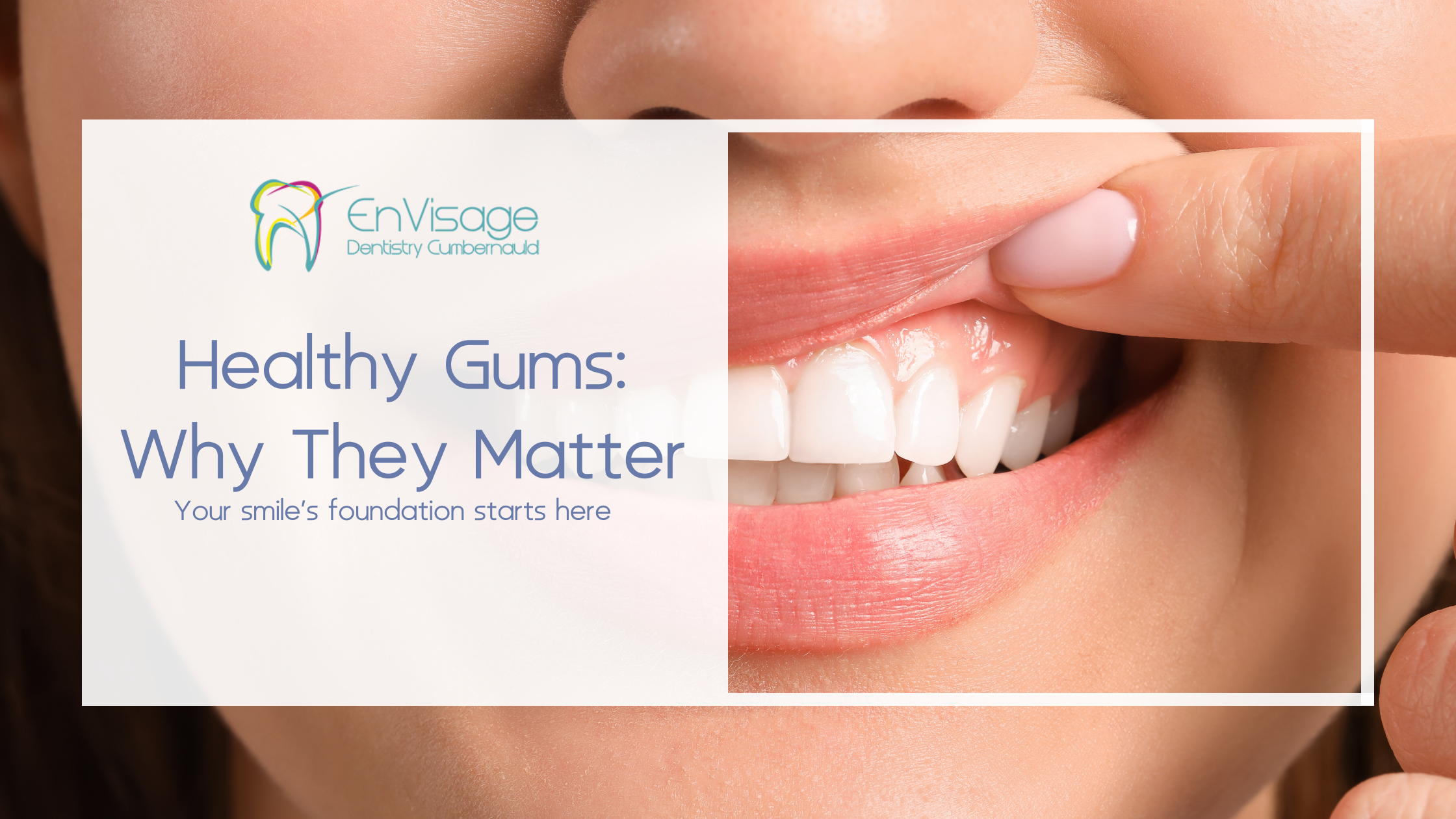
When most people think about oral health, they picture bright, white teeth. While teeth are important, your gums are just as crucial, if not more so, when it comes to maintaining a healthy smile. Healthy gums form the foundation for strong teeth, protect against infections, and play a surprisingly big role in your overall health.
At Envisage Dentistry Cumbernauld, we believe that looking after your gums is not just about preventing discomfort, it’s about protecting your long term oral and general well being.
Why Gum Health Matters
Your gums are soft tissues that anchor your teeth and protect the underlying bone. If they become inflamed or infected, it can lead to gum disease (gingivitis and periodontitis). In its early stages, gum disease may cause redness, swelling, and bleeding, but left untreated, it can result in tooth loss.
Gum problems aren’t just an oral health issue. Research has found links between advanced gum disease and other conditions such as heart disease, diabetes, and certain respiratory illnesses. This happens because harmful bacteria from infected gums can enter the bloodstream, potentially causing inflammation in other parts of the body.
We’ve explored this topic in more detail in our recent article, The Link Between Oral Health and Overall Well-Being, it’s worth a read if you’d like to understand how your mouth and body are closely connected.
Common Signs of Unhealthy Gums
- Bleeding when brushing or flossing – a key early sign of gum disease.
- Persistent bad breath – caused by bacteria in the mouth.
- Swollen, red, or tender gums – an indication of inflammation.
- Receding gums – exposing more of the tooth or root.
- Loose teeth – often a sign of advanced gum disease.
If you notice any of these symptoms, it’s important to see a dentist promptly. Early treatment can prevent long term damage and restore gum health.
How to Maintain Healthy Gums
Keeping gums healthy is a combination of good daily habits and regular professional care.
- Brush Twice Daily – Use a fluoride toothpaste and a soft bristled toothbrush to clean all tooth surfaces gently but thoroughly.
- Floss or Use Interdental Brushes – Cleaning between teeth removes plaque where toothbrushes can’t reach.
- Eat a Balanced Diet – Fresh fruit, vegetables, lean proteins, and whole grains can all support gum health.
- Avoid Smoking – Smoking reduces blood flow to the gums and increases the risk of gum disease.
- Have Regular Dental Check ups – Professional cleanings remove hardened plaque (tartar) and allow your dentist or hygienist to spot problems early.
How We Support Gum Health at Envisage Dentistry Cumbernauld
Our team takes a preventative approach to gum care. During your appointments, we check for early signs of gum disease and provide tailored advice to improve your at home routine. We also offer:
- Hygienist appointments for deep cleaning and plaque removal.
- Personalised oral health plans to address individual needs.
- Gentle treatment options for patients with gum sensitivity or existing gum issues.
We work closely with patients to make gum care manageable and effective, helping to preserve their smile for years to come.
Final Thoughts
Healthy gums are the foundation of a healthy mouth and play a vital role in protecting your overall well being. With the right habits and regular dental care, you can keep them strong and resilient for life.
If you’re due for a check up or hygienist visit, we’d be happy to help you take the next step towards healthier gums.
📞 Call us on: 01236 724891
📧 Email: [email protected]
FAQs
1. How often should I see the dentist for gum checks?
Most people benefit from a check-up every six months, but if you’re prone to gum issues, your dentist may recommend more frequent visits. NHS patients are only entitled to a routine check-up every 12 months.
2. Can gum disease be reversed?
The early stage (gingivitis) can often be reversed with improved oral care and professional cleaning. Advanced gum disease (periodontitis) can be managed but not fully reversed.
3. What’s the best toothbrush for gum health?
A medium bristled manual or electric toothbrush is best, as it’s gentle on gums while still cleaning effectively.
4. Are bleeding gums normal?
No, bleeding gums are usually a sign of inflammation or gum disease. If this happens regularly, book an appointment with your dentist.