
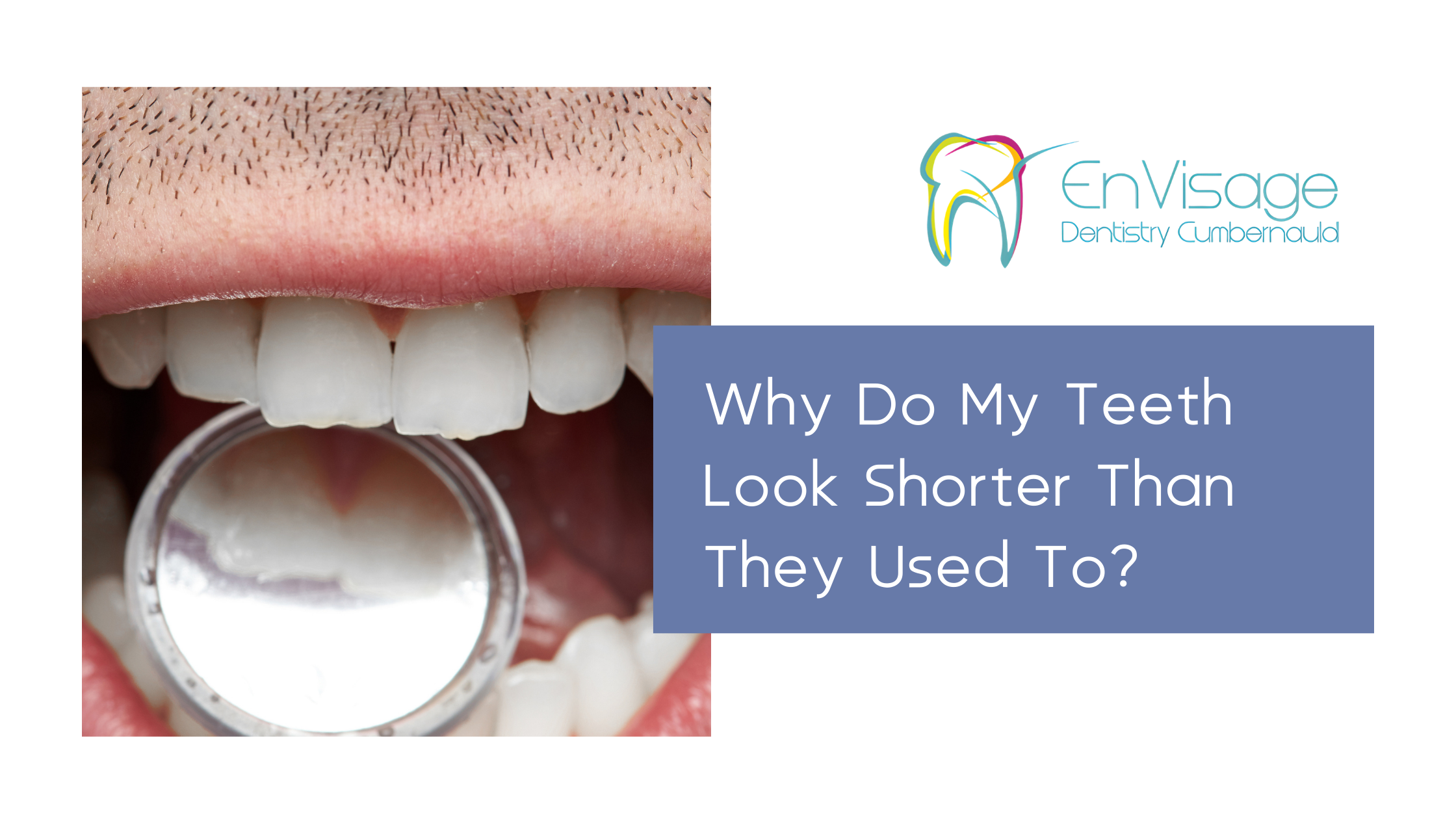
It can be surprising to notice changes in your teeth as an adult. One concern we often hear from patients in Cumbernauld is that their teeth appear shorter than they used to, even though there may be no pain or obvious damage.
Because these changes tend to happen gradually, they are often only noticed when comparing photos or looking more closely in the mirror. This can naturally lead to questions about whether something is wrong, or whether it’s simply part of everyday wear.
Understanding what causes teeth to look shorter can help you decide calmly whether reassurance and monitoring are enough, or whether a dental check would be helpful.
Why Teeth Can Appear Shorter Over Time
Teeth are strong, but they are not immune to wear. Over the years, small changes can add up and affect their shape and length.
Common contributing factors include everyday chewing, clenching or grinding the teeth, and exposure to acidic foods or drinks. Changes in the gums can also affect how much of the tooth is visible, making teeth appear shorter even when the tooth itself has not changed significantly.
In many cases, these processes happen slowly and without discomfort, which is why people are often unsure whether the change is normal or something that needs attention.
Is Tooth Wear Always a Problem?
Not all tooth wear is a cause for concern. Some level of wear is expected as part of normal use, especially as we get older.
When wear is mild and stable, it often does not affect comfort, function, or oral health. In these situations, dentists may simply record what they see and keep an eye on it during routine check-ups.
Wear may need closer monitoring if it begins to progress more quickly, affects how the teeth meet, or makes the teeth more sensitive or fragile.
Does This Always Need Treatment?
No, and this is an important point for many patients.
In line with UK dental guidance, monitoring is often the most appropriate approach when teeth are healthy and symptoms are minimal. Treatment is not automatically required just because a change has been noticed.
Further discussion may only be needed if there are signs that wear is continuing or starting to affect day-to-day comfort or oral health. Any decision is made carefully, with the patient fully involved, and without pressure to proceed.
When Is It Worth Getting Checked?
While changes are often harmless, it’s sensible to seek advice if you notice ongoing or increasing differences. This might include teeth looking flatter than before, new sensitivity, or a change in how your bite feels.
A dental examination allows these changes to be assessed properly. Even when no treatment is needed, having clarity can be reassuring and help guide long-term care.
Treatment Options
For some patients, treatment options may be discussed, depending on what is found and whether the changes are progressing.
This might involve simple protective measures, advice to reduce further wear, or restorative options if the tooth structure is becoming vulnerable. These discussions focus on maintaining tooth health and function rather than making unnecessary changes.
Thinking Long Term About Tooth Health
A long-term approach to dental care often provides the best outcomes. This includes keeping records of how teeth change over time, supporting healthy habits, and reviewing any concerns gradually rather than reacting too quickly.
By taking a measured approach, it’s often possible to preserve natural teeth comfortably for many years.
If You’d Like Advice in Cumbernauld
If you’ve noticed changes in how your teeth look and would like reassurance or guidance, the team at Envisage Dentistry Cumbernauld is here to help.
A calm assessment can clarify whether monitoring is all that’s needed or whether further discussion would be useful.
📞 01236 724891
📧 [email protected]
FAQs
Is it normal for teeth to wear down with age?
Yes. Some wear is expected over time. The key factor is whether it remains stable or starts to progress more quickly.
Can teeth look shorter even if there’s no decay?
Yes. Wear, grinding, or erosion can alter tooth shape without decay being present.
Should I be worried if there’s no pain?
Not necessarily. Many dental changes occur without pain, which is why regular reviews are useful.
Can worn teeth be protected without treatment?
In many cases, yes. Monitoring and preventive care are often sufficient.